Opening up access to fusion energy development

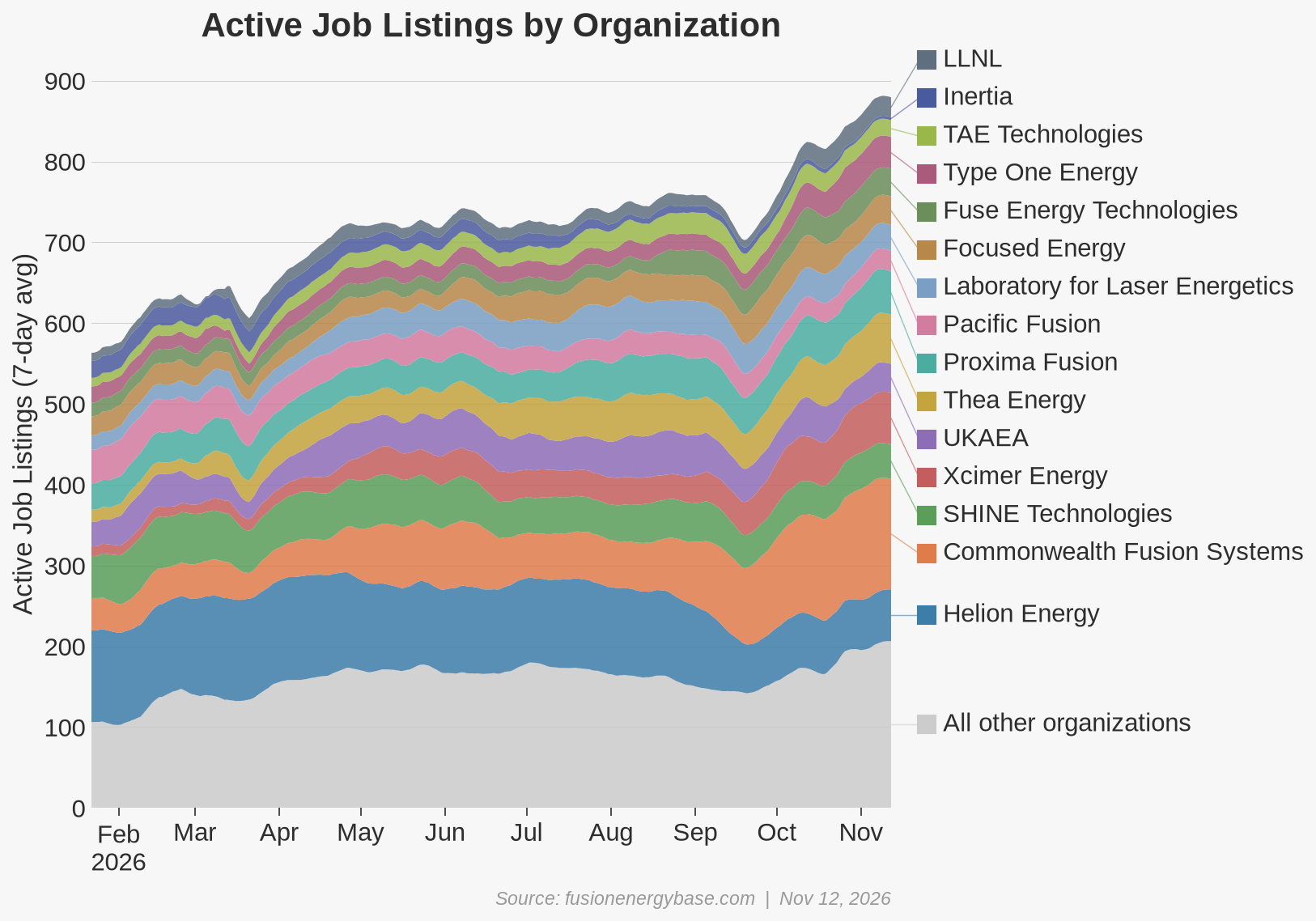
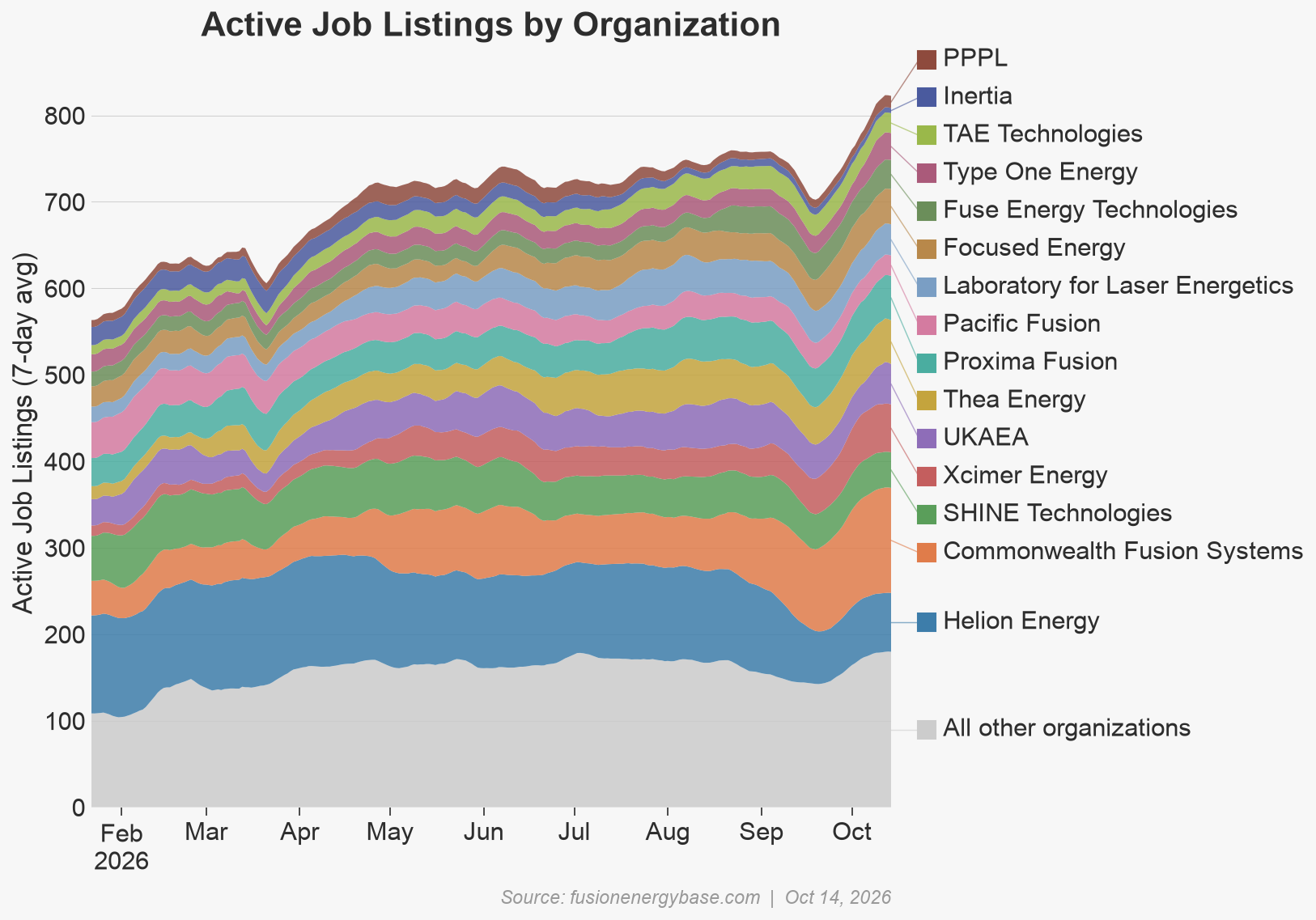
Fusion Energy Base tracks 1,095 organizations, 253 projects, 607 supply chain offerings, 939 jobs and 16 events across the fusion ecosystem.

Supported by affiliates

Become an affiliate

Newsletter

Get regular updates on the latest funding rounds, new projects, industry events, and supply chain developments.

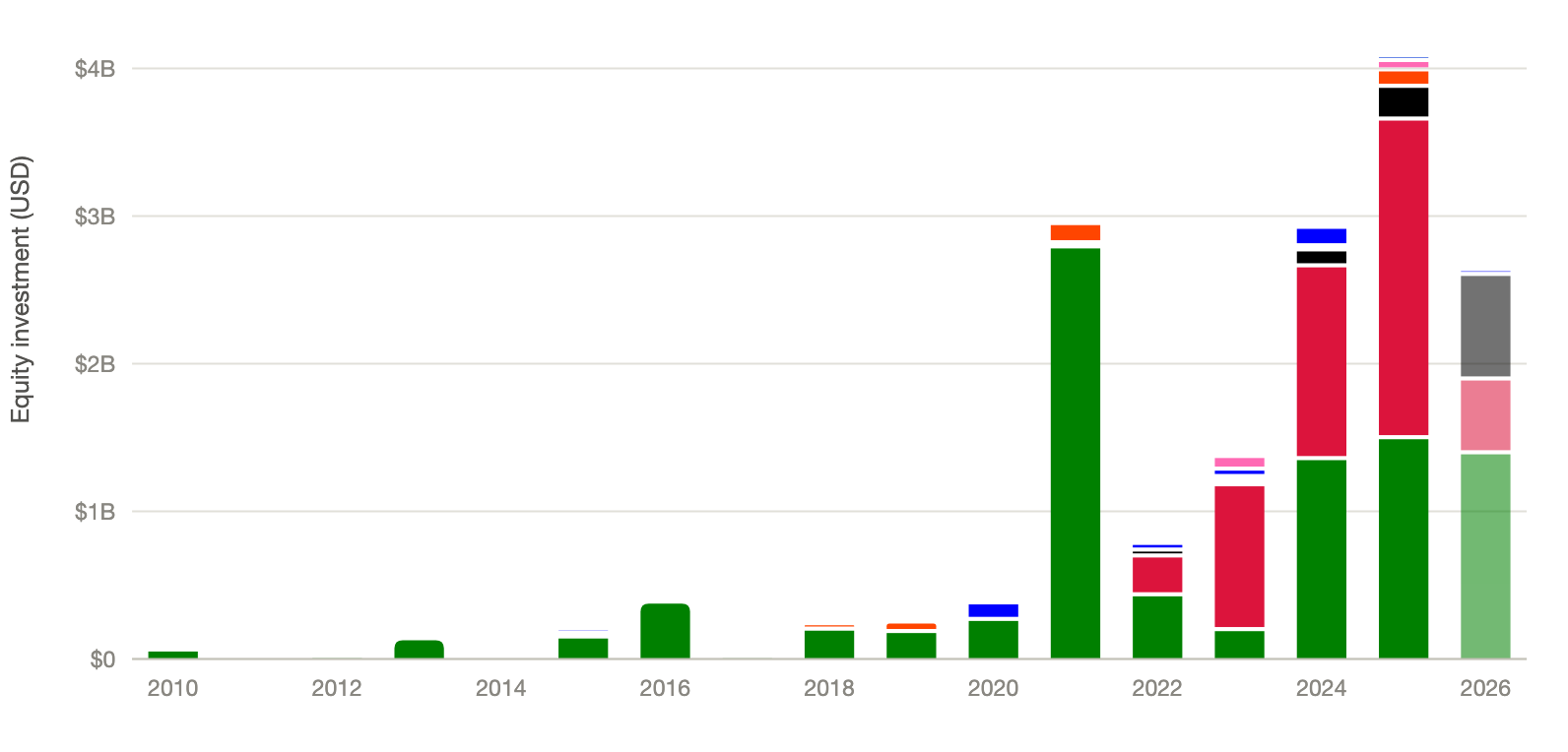
Equity funding

Open Fusion Funding
OrganizationRoundAmountAnnounced
Blue Laser Fusion logoBlue Laser FusionAlternative Public Offering (APO) Private · Oct 29, 2026Alternative Public Offering (APO) Private$34MOct 29, 2026
Cambridge Heavy IndustriesSeed · Oct 22, 2026Seed$6.2MOct 22, 2026
Borealis Fusion logoBorealis FusionSeed · Oct 15, 2026Seed$6MOct 15, 2026
Helical Fusion logoHelical FusionSeries B (2nd close) · Oct 8, 2026Series B (2nd close)$20.6MOct 8, 2026

Interactive resources

Explore the directory

Recent publications

All publications
  • Plasma Physics and Controlled Fusion

    Modeling of turbulent transport by dissipative trapped electron mode in tokamak plasmas

    S Toda, M Nunami, N Kasuya

    Plasma Physics and Controlled FusionPlasma & ConfinementAI, Modeling & Simulation

    This work develops reduced turbulent transport models for laboratory plasmas in toroidal devices by gyrokinetic analyses. The turbulent transport in the relatively collisional plasmas studied in this article is excited by the dissipative trapped electron mode (d-TEM) and the ion temperature gradient (ITG) mode. Linear analysis is performed to determine the linear growth rate and a characteristic quantity of the zonal-flow linear response, namely the zonal flow decay time. Reduced models for the d-TEM/ITG modes are constructed from linear quantities related to the mixing-length estimate and the zonal flow decay time. The reduced models reproduce the nonlinear gyrokinetic simulation results for turbulent transport. The diffusivity models and the quasilinear flux models are proposed for the reduced models. The effect of zonal flows on turbulent transport is studied for the d-TEM/ITG plasmas.

  • Plasma Physics and Controlled Fusion

    Incorporating soft X-ray measurements for MHD equilibrium reconstructions of Wendelstein 7-X plasmas

    Edith Victoria Hausten, Charlotte Büschel, Christian Brandt, Henning Thomsen, Kian Rahbarnia, Samuel A Lazerson

    Plasma Physics and Controlled FusionPlasma & ConfinementControl & DiagnosticsAI, Modeling & Simulation

    Three-dimensional reconstructions of Wendelstein 7-X (W7-X) equilibria incorporating soft X-ray measurements are presented. The STELLOPT code [2] has been enhanced to include soft X-ray measurements, complementing the set of diagnostics accessible for equilibrium search. The approach is based on the alignment of radiation strength with magnetic flux surfaces, which is justified for most W7-X plasmas. The emissivity reconstruction works reliably and reproduces measurements within the expected range of uncertainty. Results are in line with independent tomographic inversion methods for calculating radiation patterns, offering an alternative way of analyzing the soft X-ray signals. A comparison of the magnetic axis shift found in the equilibria as well as the tomograms shows overall agreement. The methods are demonstrated for three W7-X experimental programs, covering different magnetic field configurations and plasma parameters, including high performance plasma cases with volume averaged plasma beta of up to 2 %, central beta of up to 7 % and magnetic axis shift of up to 12 cm. For these experiments, the standard W7-X diagnostic set constrains the flux-surface geometry in the equilibrium reconstruction to an accuracy of about 6 mm.

  • Plasma Physics and Controlled Fusion

    Outcomes of activation measurements and analyses of ITER materials during JET DTE3 operations

    Lee William Packer, Paola Batistoni, Steven Bradnam, Marco Fabbri, Nicola Fonnesu, M R Gilbert, Z Ghani, Michael Gorley, Callum Grove, A Harte, et al.

    Plasma Physics and Controlled FusionMaterials & Plasma-Facing ComponentsBlankets & NeutronicsAI, Modeling & Simulation

    The 2023 JET deuterium-tritium (D--T) experimental campaign (DTE3) achieved record fusion energy output (69 MJ), providing a unique 14.1~MeV neutron environment for irradiation studies. A range of ITER material samples were exposed in a Long-Term Irradiation Station (LTIS) within the JET nuclear environment to neutron fluxes up to $2 \times 10^{13}$~n/cm$^{2}$/s, reaching a total neutron fluence of $7 \times 10^{15}$~n/cm$^{2}$, the highest achieved in a tokamak. Post-irradiation analysis using high-resolution gamma spectrometry across five laboratories identified a range of neutron-induced activation products present in these samples, which were quantitatively compared with neutronics simulation predictions. Complementary neutron fluence measurements with metallic dosimetry foils located in the LTIS enabled validation of the simulation approach via MCNP and FISPACT-II codes. The DTE3 campaign results, combined with those obtained from prior D--T campaigns, provide a highly valuable dataset for ITER and other D--T machines, supporting the validation of predictive nuclear modelling tools towards sustained high power D--T operations.

  • Plasma Physics and Controlled Fusion

    The HSX stellarator: History, Design, Construction and Operation

    Benedikt Geiger, Thomas Gallenberger, Samuel Kelson, Alex Alexander Klasing, Celine Lu, Julia Marshall, Adam Rasmussen, Kassia Rose Schraufnagel, Jacob Shin, George Tryfonos, et al.

    Plasma Physics and Controlled FusionPlasma & ConfinementFusion Plant Engineering

    The Helically Symmetric Experiment (HSX) is a modular stellarator optimized for reduced neoclassical transport. It has a major radius of 1.2 m and an on-axis magnetic field of typically 1 T, and has been operating since 2001. The device distinguishes itself by producing plasmas with fusion relevant electron temperatures well above 1 keV, as well as by providing a comprehensive suite of plasma diagnostics ranging from profile measurements to fluctuation diagnostics. Moreover, as the world's only quasi-helically symmetric device, HSX serves as an important platform for both experimental and numerical studies. In this work, we present an overview of the history, design, construction, and ongoing operation of HSX, with the goal of establishing a reference and informing the design of future stellarator experiments.

Daily or weekly updates on the latest fusion research.